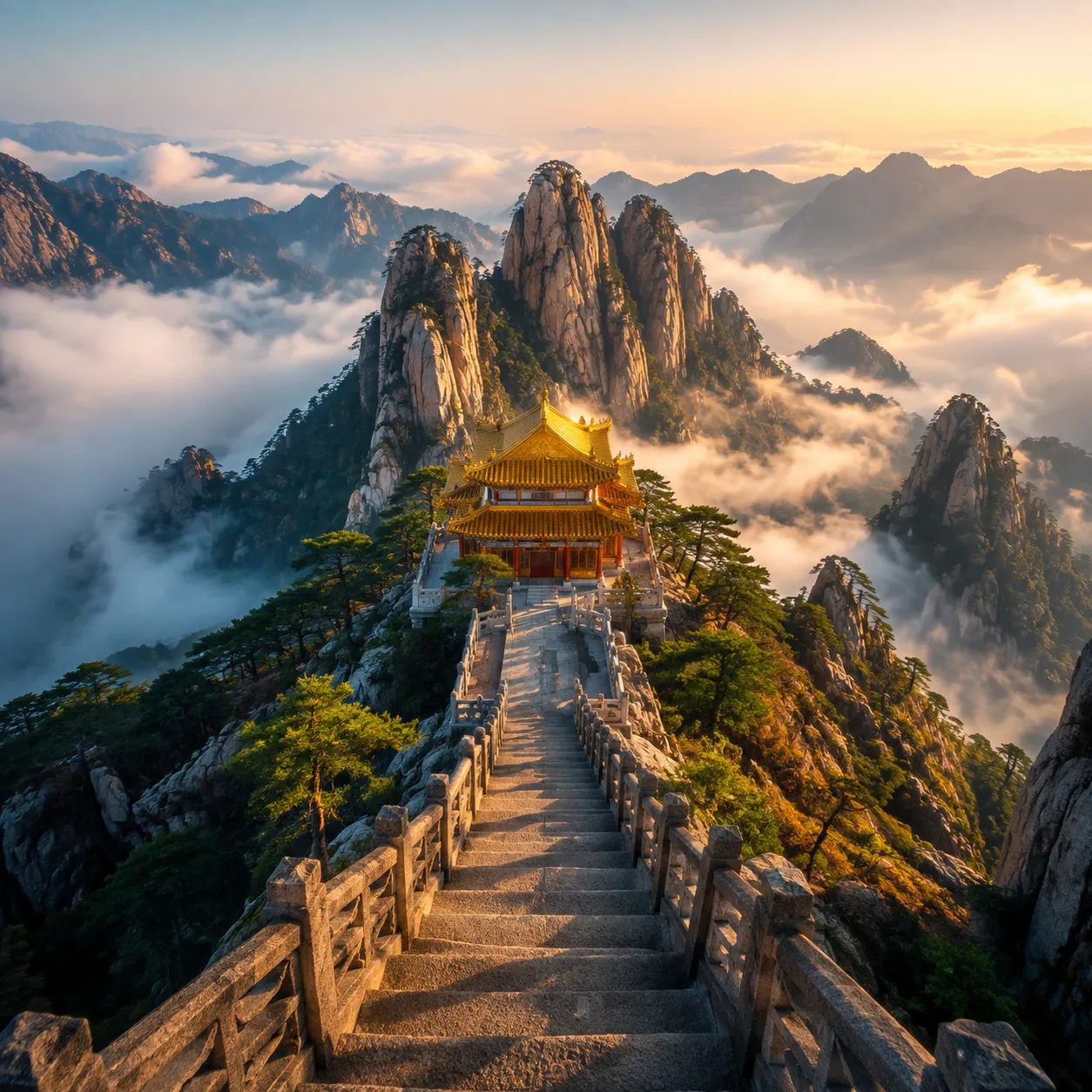
Photo: Chinese Mountains
Mount Jiuhua
Jiu Hua Shan
One of China's four sacred Buddhist mountains, 99 peaks shrouded in incense
About Mount Jiuhua
Mount Jiuhua (Jiuhuashan) in Anhui Province is one of China's Four Sacred Buddhist Mountains, dedicated to Bodhisattva Ksitigarbha (Dizang Pusa), the protector of souls in the afterlife. Located just south of the Yangtze River near the city of Chizhou, Jiuhua's 99 named peaks rise from a landscape of bamboo forests, tea plantations, and terraced rice paddies. The name 'Jiuhua' means 'Nine Glories,' referring to nine particularly beautiful peaks that resemble lotus flowers emerging from mist. The mountain became a major Buddhist center in the 8th century when a Korean prince named Kim Gyo-gak (known in Chinese as Jin Qiaojue) arrived, practiced meditation for 75 years, and upon his death at age 99, his body was found to be incorrupt — a sign of enlightenment in Buddhist tradition. His mummified body, preserved in the Baisui Palace, can still be viewed today and is considered the mountain's most sacred relic. At its peak, Jiuhua hosted over 300 temples and 5,000 monks. Today, approximately 90 temples remain active, and the mountain is as much a living religious community as a tourist destination. The Tiantai Peak (1,306m) at the summit offers panoramic views and is reached by cable car followed by a steep staircase. The most atmospheric way to experience Jiuhua is to walk the pilgrimage circuit between temples, through incense smoke that drifts through ancient cypress trees, past monks in grey robes and pilgrims performing prostrations. Spring (April-May) brings blooming rhododendrons, while autumn (October) offers clear skies and golden foliage. Jiuhua is accessible via high-speed train to Chizhou Station (3.5h from Shanghai, 2.5h from Nanjing) followed by a 1-hour bus.
Mountain Facts
Cultural Significance
Sacred to Ksitigarbha (Dizang) Bodhisattva. Home to 90+ temples and the preserved bodies of Buddhist monks.
Highlights
- • Tiantai Peak at sunrise
- • Baisui Palace
- • Huacheng Temple
- • Body Hall with preserved monks
- • 99-peak panorama from Shiwang Peak
When to Go
April-May for mild weather and blooming azaleas among the temples; September-October for crisp air, the famous misty mornings, and autumn color on the slopes. Both windows offer 10-25 C and the clearest views from Shiwang Peak (1,342m). Summer (June-August) is warm and humid (up to 33 C) with afternoon showers; the mountain's many temple halls stay cool, and this is the season of the Ksitigarbha festival (7th lunar month) when pilgrims arrive in large numbers. Winter (December-February) brings occasional snow that turns the temple roofs and the '99 temples' into an ink-painting scene; temperatures range -2 to 8 C, and the cable car and main temples stay open. The best photographs are the morning incense smoke rising through the mist over the Jiuhua street temples.
How to Get There
By Air: Fly to Chizhou Jiuhuashan Airport (JUH) — direct flights from Shanghai, Guangzhou, Shenzhen, Xi'an, and Chengdu. From the airport, a 1-hour bus or taxi reaches the scenic area. By High-Speed Train: Chizhou Station on the Shanghai-Wuhan line (about 2.5h from Shanghai) is the main rail gateway; buses from Chizhou to Jiuhua Mountain take 1-1.5 hours (CNY 30-40). By Road: From Nanjing or Hefei, direct buses reach the mountain gate (3-4 hours). Getting around: The scenic area centers on Jiuhua Street (the 'temple town' at 650m) where most pilgrims stay. From there, a shuttle bus system (CNY 50) connects the major temples, and a cable car (CNY 160 round trip) climbs to the Tiantai summit area at 1,306m. Entry Fee: CNY 190 (peak) / CNY 140 (off-peak) — one of the more expensive Chinese scenic areas.
Frequently Asked Questions
Is Mount Jiuhua worth visiting? +
What is the best time to visit Mount Jiuhua? +
How do I get to Mount Jiuhua? +
How difficult is the visit? +
What should I bring for Mount Jiuhua? +
You May Also Like
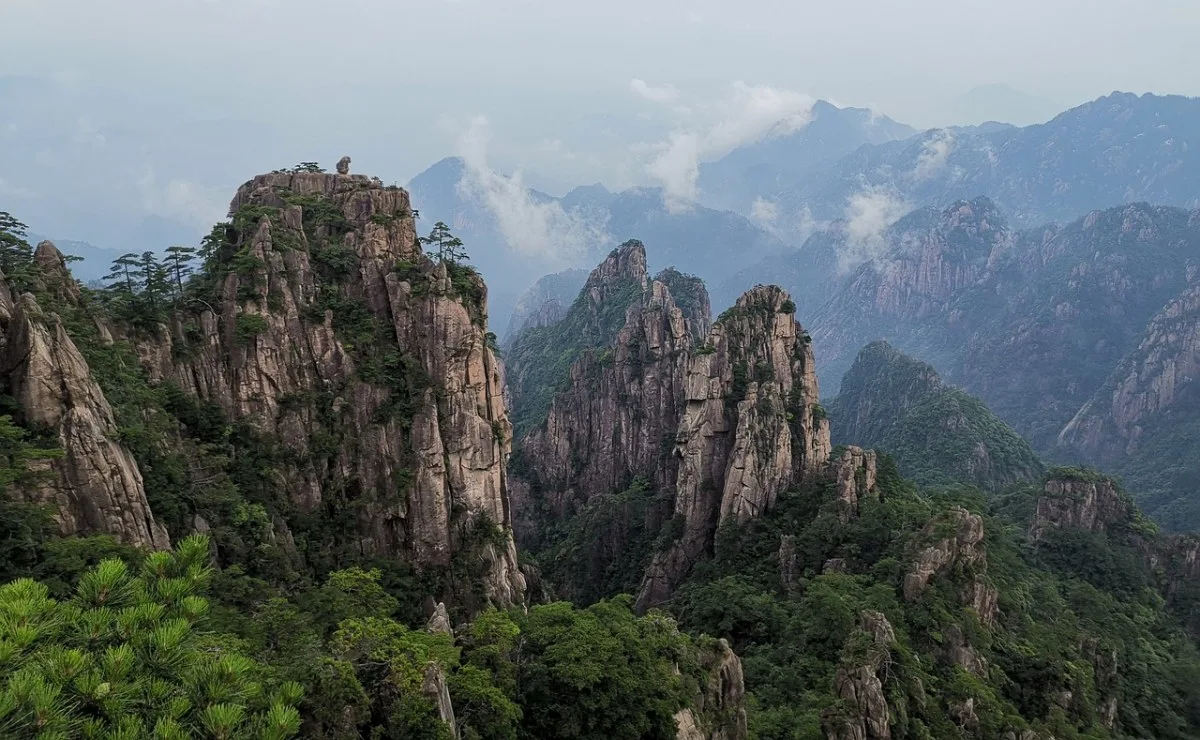
Mount Huangshan
Huang Shan · Anhui
China's most iconic peaks — sea of clouds and granite spires
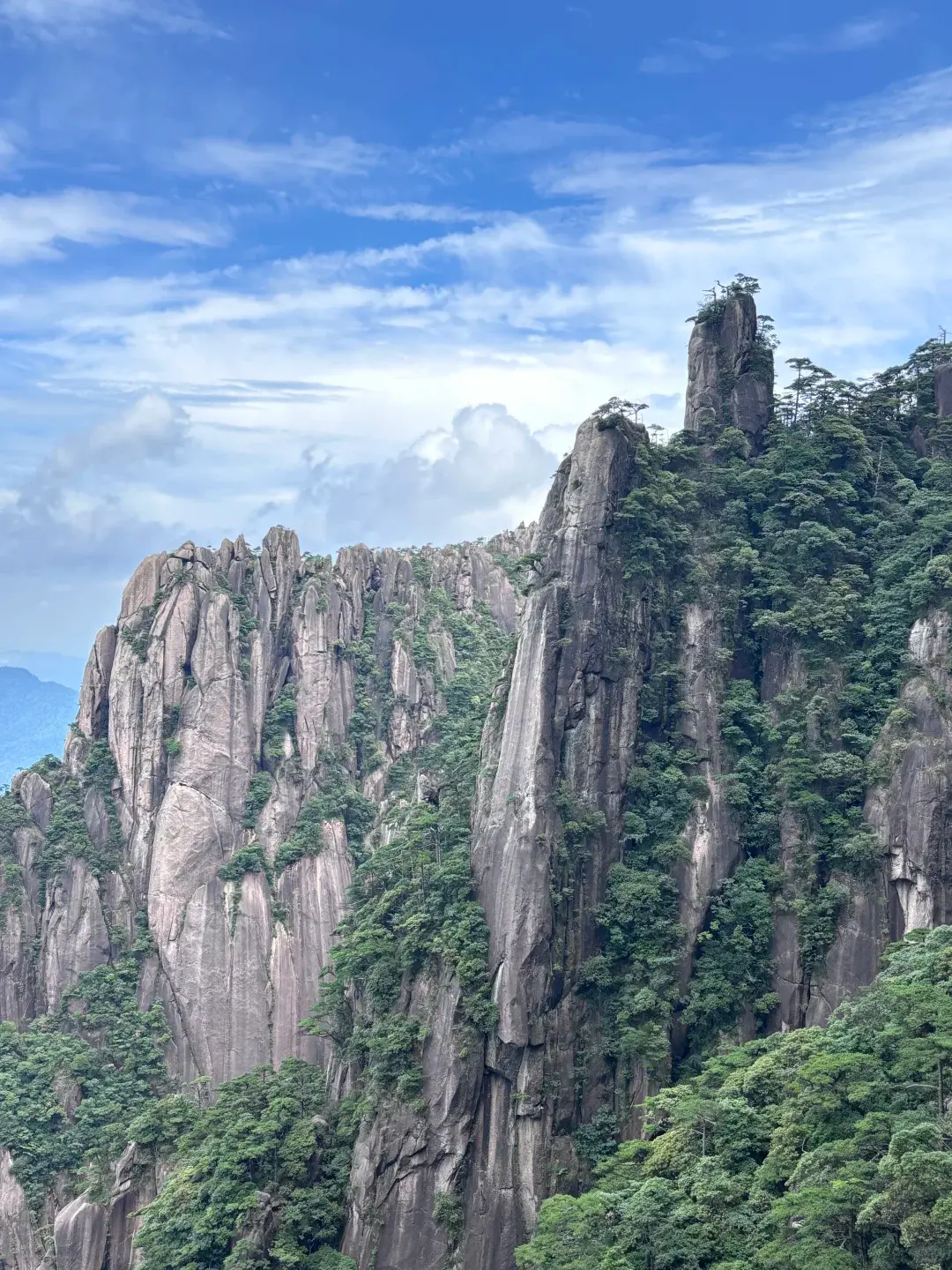
Mount Sanqing
Sanqing Shan · Jiangxi
A quieter Huangshan — granite peaks without the crowds
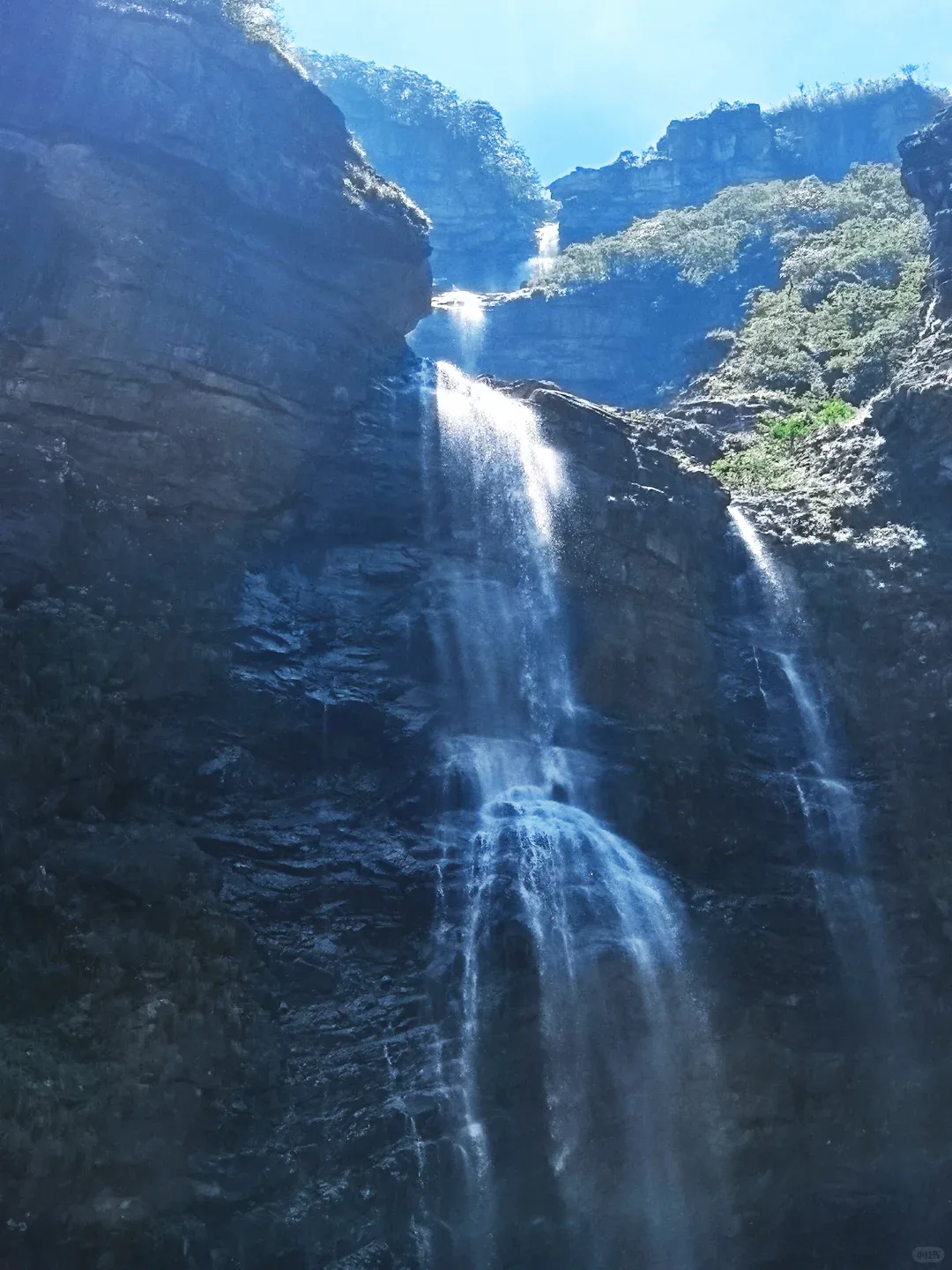
Mount Lushan
Lu Shan · Jiangxi
The mountain of poets, mist, and colonial villas — 1,500 years of inspiration