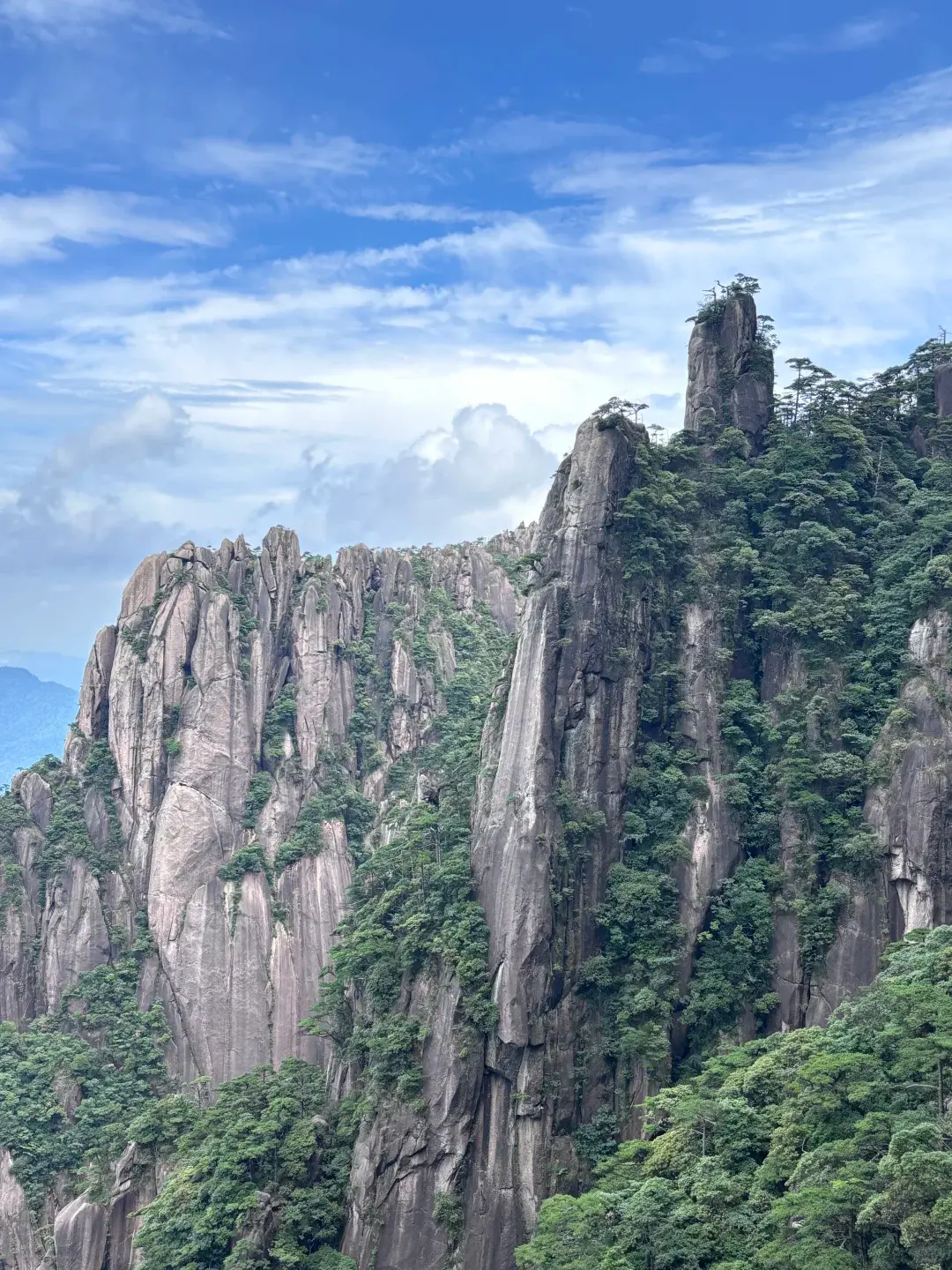
Photo: Chinese Mountains
Mount Sanqing
Sanqing Shan
A quieter Huangshan — granite peaks without the crowds
About Mount Sanqing
Mount Sanqing (Sanqingshan) in Jiangxi Province is arguably the most underrated mountain in China. Named after the Three Pure Ones — the highest deities in the Daoist pantheon — this UNESCO World Heritage Site (2008) combines the granite spire scenery of Huangshan with far fewer visitors. The mountain features three main peaks — Yujing (1,817m), Yuxu, and Yuhua — surrounded by a fantastical landscape of twisted granite pillars, ancient pine trees growing horizontally from vertical rock faces, and suspended walkways that curl around cliff edges above thousand-meter drops. What sets Sanqing apart is the quality of its hiking infrastructure: a 3,600-meter elevated boardwalk (the West Coast Trail) wraps around the mountain's western face at approximately 1,600m elevation, offering constant, dramatic views with relatively gentle gradients. The East Coast Trail provides a similar experience on the eastern face. Together, these walkways make Sanqing's jaw-dropping scenery accessible to anyone who can walk 3-4 hours — no technical climbing required. The mountain's Daoist heritage runs deep: for over 1,600 years, practitioners have sought solitude here, building temples that seem to grow from the rock. The morning sea of clouds, when the granite spires emerge from mist like islands in a white ocean, rivals Huangshan's famous views — but with a fraction of the crowds. Spring (April-May) for azaleas or autumn (October-November) for crisp visibility are the best seasons.
Mountain Facts
Cultural Significance
UNESCO Geopark. Named after the Three Pure Ones of Daoism. Geologically a sibling to Huangshan but far less visited.
Highlights
- • Goddess of Mercy Peak
- • Python Emerging from the Mountain
- • West Coast cliff trail
- • Sunshine Coast boardwalk
- • Sanqing Temple (1,530m)
When to Go
April-June: azalea season turns the granite peaks pink at mid-elevations, and the sea of clouds is common in May-June after rain; temperatures 10-25 C. July-August: warm and wet, with frequent mist that obscures the famous pillars — mornings before 10 AM are the clearest window. September-November is the golden season: the driest months, the highest visibility, the famous 'Sanqing mist' at sunrise, and autumn colors in the valleys; 8-20 C. Winter (December-February): below freezing at the summit (often -5 to -10 C), but the rime ice on the granite spires and the near-empty boardwalks create a starkly beautiful landscape; the Western Cable Car may run reduced hours. The sunrise from Yujing Peak (1,819.9m) is the classic photographic moment — stay overnight at a summit hotel.
How to Get There
By Air: Fly to Shangrao Sanqingshan Airport (SQD, opened 2019) or to Nanchang Changbei International Airport (3h drive). By High-Speed Train: Shangrao Station on the Shanghai-Kunming line is the main gateway (2h from Hangzhou, 2.5h from Shanghai). From Shangrao Station, direct buses to the scenic area take 1.5-2 hours (CNY 27). Getting up the mountain: two cable cars — the Southern Cable Car (from Wai Shuangxi, 40 min line in peak season) and the Western Cable Car (from Jinsha, faster access to the main loop). Both cost CNY 125 round trip on top of the CNY 120 entry. The 3.6km suspended boardwalk loop around the summit area is mostly flat and takes 3-4 hours at a relaxed pace. Entry Fee: CNY 120 (peak), CNY 80 (low season).
Frequently Asked Questions
Is Mount Sanqing worth visiting? +
What is the best time to visit Sanqing? +
How do I get to Mount Sanqing? +
How difficult is hiking Mount Sanqing? +
What should I bring for Sanqing? +
You May Also Like
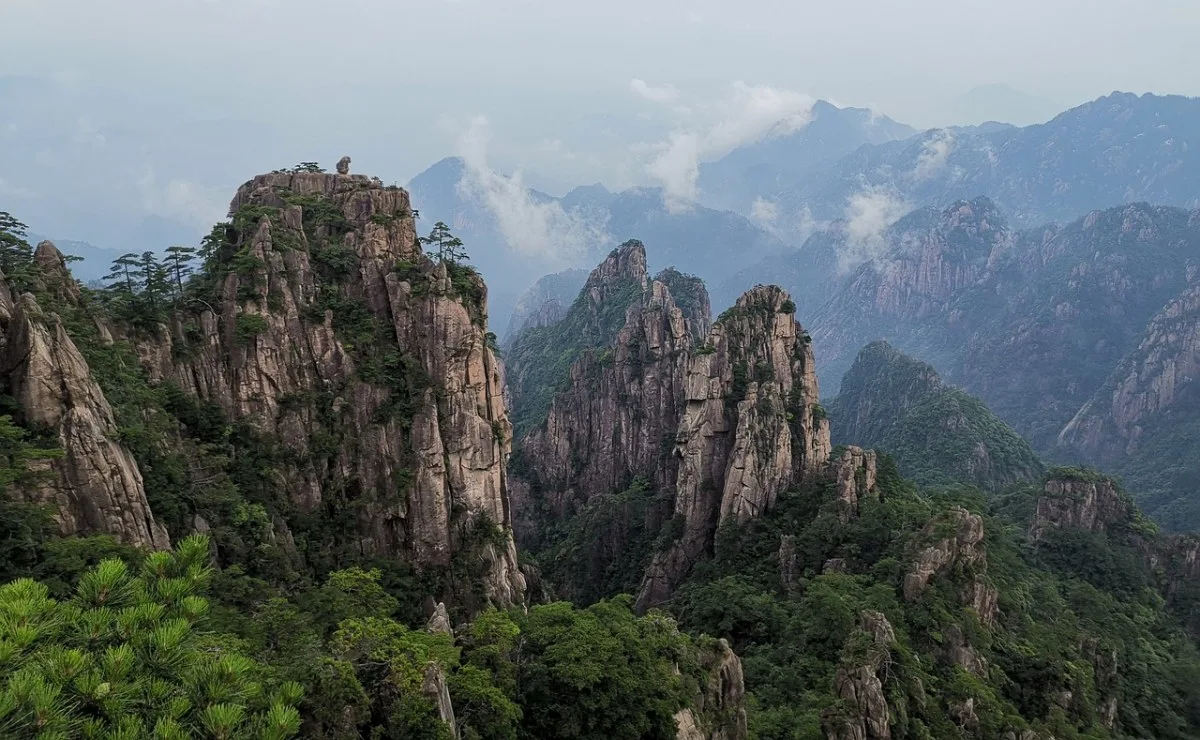
Mount Huangshan
Huang Shan · Anhui
China's most iconic peaks — sea of clouds and granite spires
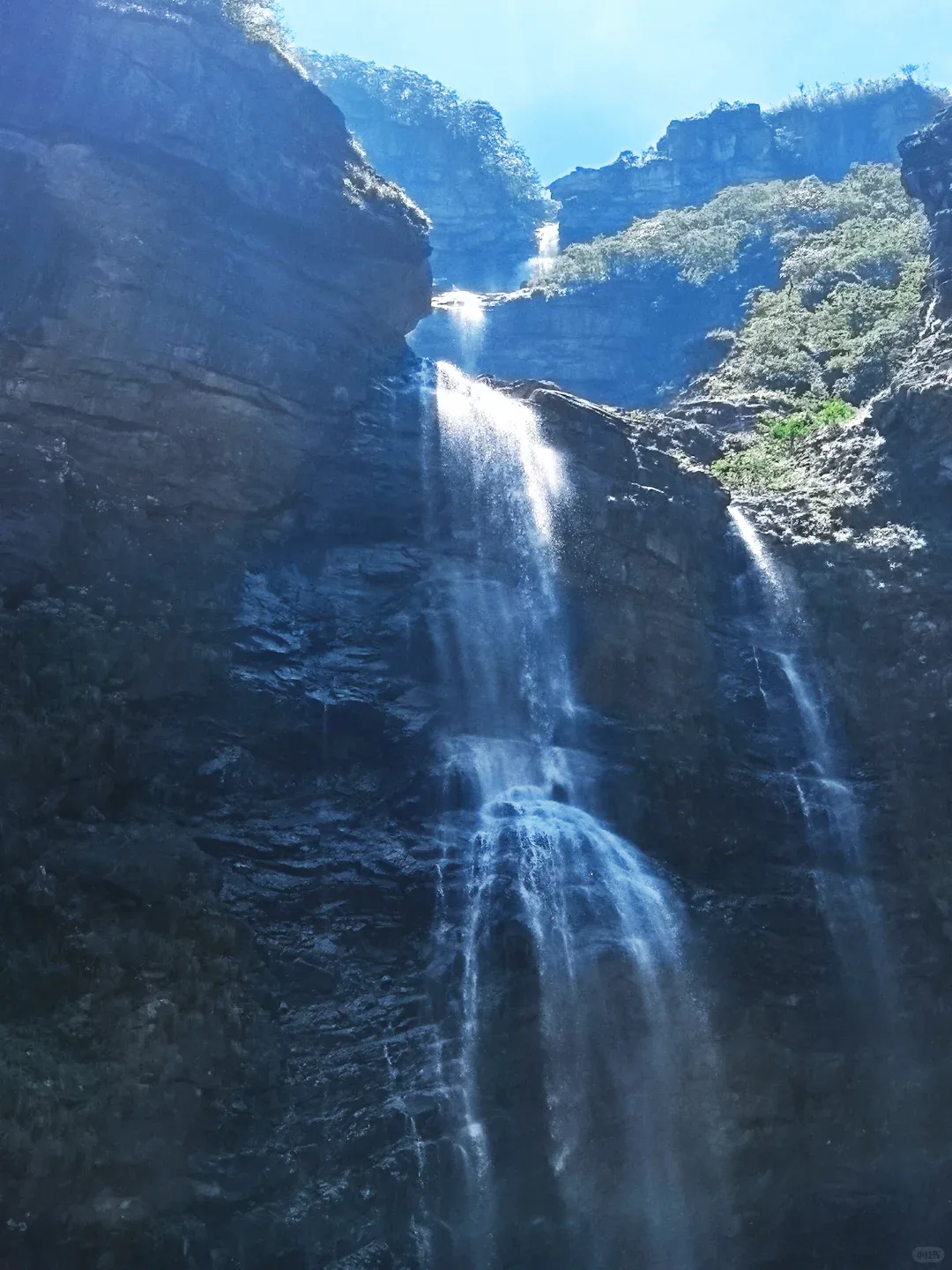
Mount Lushan
Lu Shan · Jiangxi
The mountain of poets, mist, and colonial villas — 1,500 years of inspiration
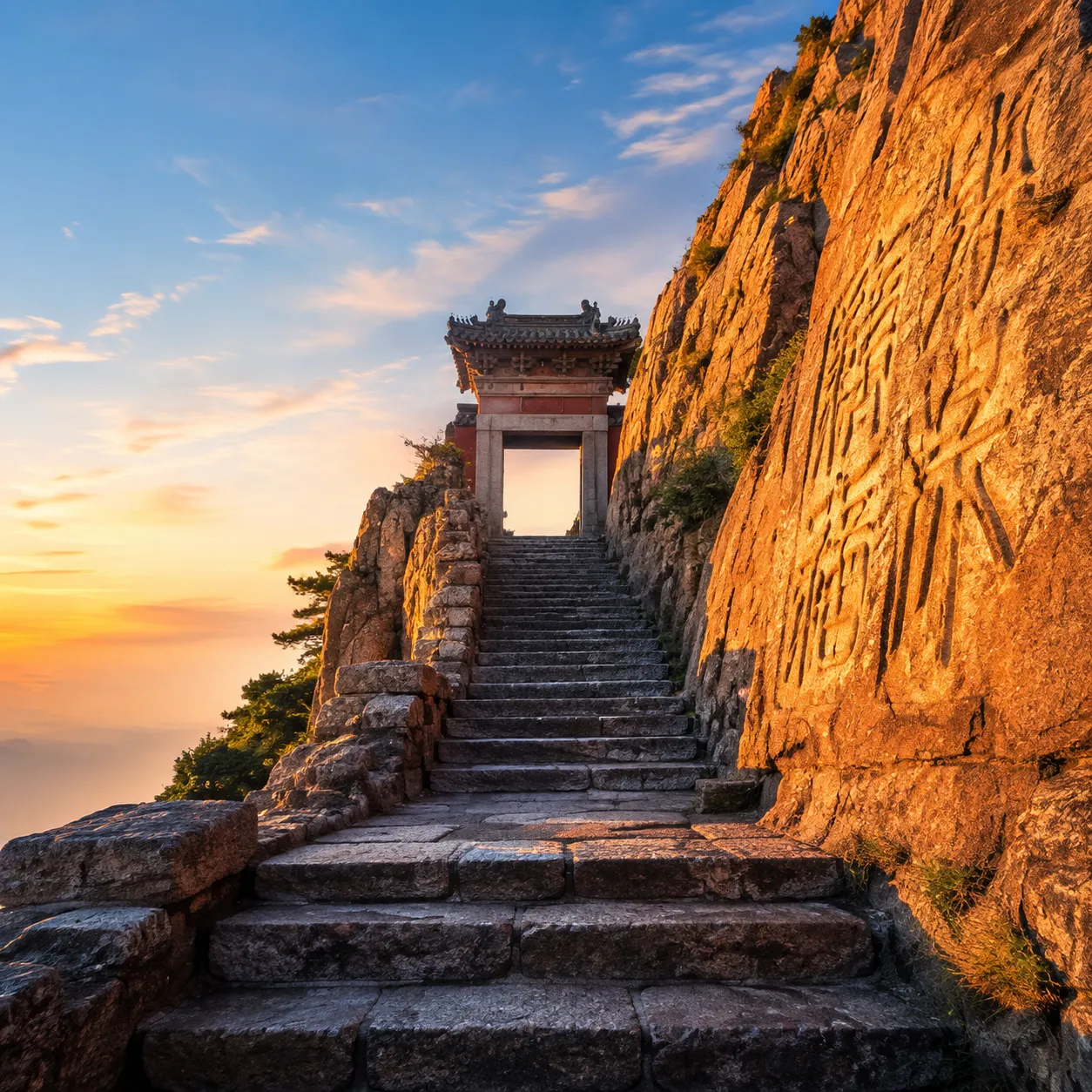
Mount Tai
Tai Shan · Shandong
The most sacred mountain — climbed by emperors for 3,000 years