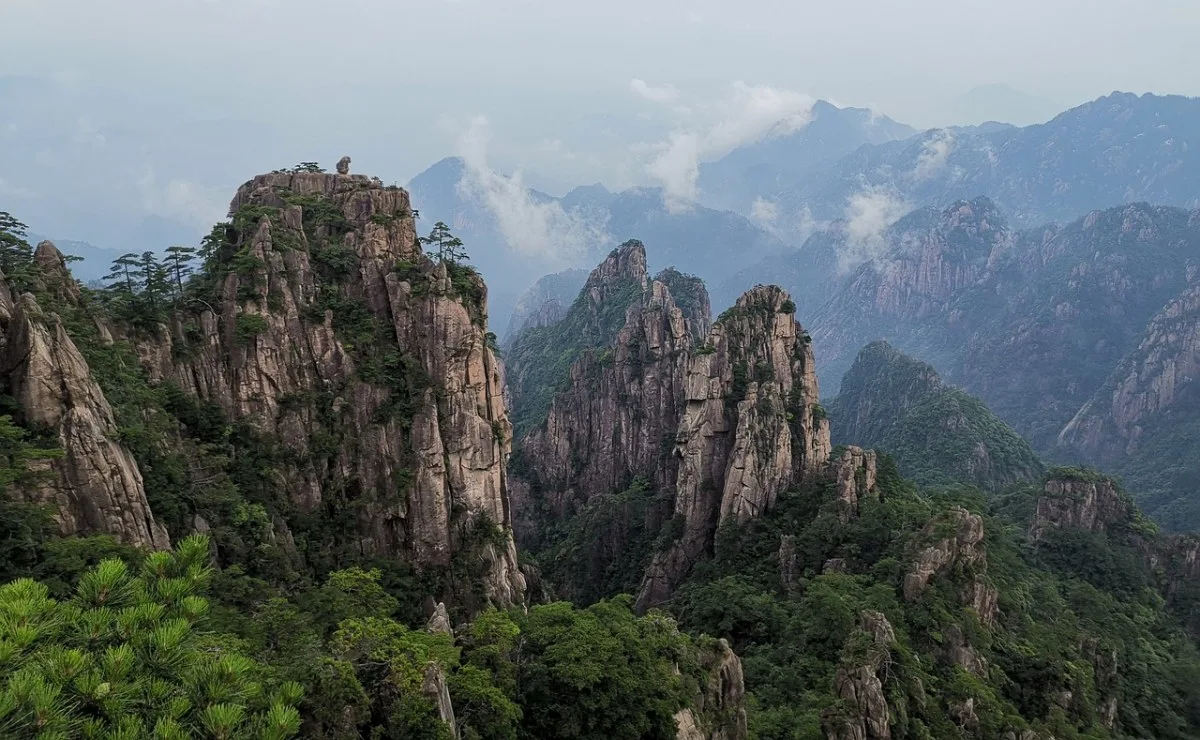
Photo: Pixabay (CC0)
Mount Huangshan
Huang Shan
China's most iconic peaks — sea of clouds and granite spires
Information verified: August 2026 — prices and opening status change; recheck official sources before you travel.
Is Mount Huangshan worth it?
A world-class mountain that genuinely lives up to its reputation
Huangshan is the single most iconic mountain landscape in China. A 2-day trip delivers the full package: granite spires, sea of clouds, the Welcoming Pine, and one of China's great sunrise experiences. Well-developed cable cars keep it achievable for most fitness levels, and the off-peak ticket price (CNY 150 in winter) plus quiet trails make it genuinely underrated outside autumn.
You only have one day and cannot stay overnight, you are avoiding crowds at any cost (peak autumn weekends are shoulder-to-shoulder), or you want alpine wilderness rather than a developed tourist park with stone stairs and queues.
First-time visitors to China's famous mountains, photographers chasing cloud seas, and anyone who wants a 'greatest hits' experience with cable car assistance.
About Mount Huangshan
Mount Huangshan is arguably the most celebrated mountain in China. Its jagged granite peaks, ancient pine trees, hot springs, and the famous sea of clouds have inspired poets, painters, and travelers for over a thousand years.
Mountain Facts
Cultural Significance
The loveliest mountain of China, inspiring classical landscape painting for centuries.
Highlights
- • Sunrise at Dawn Pavilion
- • Welcoming Pine (Yingke Song)
- • West Sea Grand Canyon trail
- • Hot springs at the base
- • Xihai Grand Canyon
Who should go — and who should skip
A quick reality check for six common traveler profiles, based on the real terrain, stairs, and queues.
First-time visitor
GOHuangshan is the definitive first mountain experience in China.
Take the 2-day itinerary: up the eastern cable car, stay at Beihai or Xihai Hotel, catch sunrise at Dawn Pavilion or Guangmingding, then descend via the front (Jade Screen) cable car. Book the summit hotel 3-4 weeks ahead — it is the difference between a great trip and a rushed one.
Photographer
GOThe best cloud-sea and sunrise odds of any Chinese mountain.
Go in late October or November and stay 2 nights to get two sunrise attempts. Check the official Huangshan weather forecast (which publishes cloud-sea and sunrise probability) the night before. Dawn Pavilion and Guangmingding are the two essential sunrise spots; the sea of clouds is most likely after a cold front clears humidity.
Traveling with kids
IT DEPENDSDoable with cable cars, but the stone stairs are relentless.
Take cable cars both ways and limit walking to the flat ridge sections around Beihai and the Welcoming Pine. Budget 2x the time adults need. Avoid the West Sea Grand Canyon descent with young children. Book a private room, not a dorm bed, at the summit hotel.
Tight budget
GOOff-peak winter visits cut costs by 30-40% and crowds by 80%.
Visit December-February: entry drops to CNY 150, dorm beds at summit hotels are CNY 300-400, and food stalls are cheaper. Bring your own snacks and water (instant noodles cost CNY 25-40 on the mountain). One cable car round trip is enough for the 2-day loop. Total: about CNY 800 per person, transport excluded.
Older travelers / knee issues
IT DEPENDSAccessible by cable car, but plan around the stairs.
Use cable cars for both ascent and descent and skip the West Sea Grand Canyon loop (steep, 1,000+ steps down). Seniors over 65 get discounted entry (about CNY 115 peak). The flat section from Beihai to Guangmingding via the ridgeline is the most rewarding walk. Avoid stairs in wet weather — they get slippery.
Serious hiker
GOReal hiking exists, but this is a scenic park, not wilderness.
Hike the full Eastern Steps route (Yungu Temple to White Goose Ridge, 2.5-3.5 hours, 800-1,000m of stairs) instead of taking the cable car, then do the West Sea Grand Canyon loop (one-way, 4-5 hours, exit via the sightseeing railway). In the 2024-2029 rotation, Heavenly Capital Peak (Tiandu) is open — the toughest scramble on the mountain, with the famous 85-degree 'ladder' section.
Which route should you take?
All the ways up and around, compared side by side so you don't have to open five pages.
| Route | Time | Cost | Difficulty | Scenery | Best for |
|---|---|---|---|---|---|
| Eastern cable car (Yungu) Recommended Yungu Temple, east side · Cable car | 8-12 min | CNY 80-90 each way | Easy | ★★★★★ | The default choice for first-timers and the 2-day itinerary |
| Western cable car (Yuping / Jade Screen) Mercy Light Temple (Ciguang), south side · Cable car | 8-10 min | CNY 90-100 each way | Easy | ★★★★★ | Visitors descending after a 2-day loop, or those prioritizing the Welcoming Pine |
| Full hike via Eastern Steps Yungu Temple, east side · Hike | 2.5-3.5 hours up (7 km) | Free (park entry only) | Hard | ★★★★★ | Fit hikers on a budget; not for families or anyone with knee issues |
| West Sea Grand Canyon loop From Beihai / Xihai area · Hike | 4-5 hours (one-way loop) | CNY 100 for the sightseeing railway out (optional) | Hard | ★★★★★ | Moderate-to-fit travelers with a full day; skip it for family or knee-sensitive trips |
Eastern cable car (Yungu)
RecommendedYungu Temple, east side · Cable car
- +Shortest queue of the three cable cars
- +Delivers you to White Goose Ridge near Beihai — the ideal base for a 2-day loop
- +Operates year-round, including winter
- –You skip the 2.5-3h hike up
- –Ridge area from the top still has steps to the summit viewpoints
Best for: The default choice for first-timers and the 2-day itinerary
Western cable car (Yuping / Jade Screen)
Mercy Light Temple (Ciguang), south side · Cable car
- +Approaches the Welcoming Pine and front-side cliffs directly
- +Most dramatic scenery on the ascent
- –Longer queues than the eastern cable car in peak season
- –Reaching the summit viewpoints from Yupinglou still involves a big stair climb
Best for: Visitors descending after a 2-day loop, or those prioritizing the Welcoming Pine
Full hike via Eastern Steps
Yungu Temple, east side · Hike
- +Saves CNY 80-90 and earns genuine bragging rights
- +Quiet trail — most visitors take the cable car
- +Warms you up before the ridge walks
- –800-1,000m of relentless stone stairs with no flat sections
- –Trees block most views for the first 2 hours
- –Knees take a beating — allow recovery time
Best for: Fit hikers on a budget; not for families or anyone with knee issues
West Sea Grand Canyon loop
From Beihai / Xihai area · Hike
- +The most spectacular scenery on the mountain — granite walls, hanging walkways, sea of clouds
- +Guided path makes it safe despite the drop-offs
- –Steep, with 1,000+ steps of descent into the canyon
- –Physically demanding; the climb back out is brutal without the railway
- –Closed in winter and during heavy rain or lightning
Best for: Moderate-to-fit travelers with a full day; skip it for family or knee-sensitive trips
Plan your trip: day-by-day
Three tested ways to see the mountain, from a rushed day trip to a full canyon expedition. Switch tabs to compare.
Fast-paced day trip
Only if you cannot stay overnight — you will miss sunrise and the canyon- 06:30
First shuttle bus from Tangkou
30 minTake the 06:30 park shuttle (CNY 19) to Yungu Temple station to beat the queues.
- 07:10
Eastern cable car up
1.5 hFirst cable car of the day. Walk the ridge from White Goose Ridge to Beihai and Dawn Pavilion (30-40 min).
- 09:00
Startish Peak (Shixinfeng)
1 hShort detour — the classic pine-on-cliff photo spot with views back over the sea of clouds.
- 10:30
Walk to Guangmingding
1.5 hThe flat, scenic ridge walk via Beihai Hotel. Views open up dramatically to the west.
- 12:30
Lunch and descend to Yupinglou
2.5 hLunch at Tianhai or Guangmingding food areas (CNY 60-100). Walk down through the Aoyu (Turtle) peak section to the Welcoming Pine.
- 15:30
Welcoming Pine and Jade Screen cable car down
1.5 hSee the famous Yingke Pine, then take the western cable car down (CNY 90-100) and the shuttle back to Tangkou.
Editor's note: One day works only with cable cars both ways and an early start. You miss sunrise and the West Sea Grand Canyon — if you can stretch to two days, do it.
Where to stay: summit or base?
The single biggest decision of the trip is not which route — it is whether you sleep on the mountain. Here is the honest trade-off.
Beihai Hotel (Beihai Binguan)
- +Central location for the classic 2-day loop
- +Closest summit hotel to the best sunrise viewpoint
- +Dining hall with warm meals
- –Books out 2-4 weeks ahead on weekends
- –Private rooms are basic for the price
Best for: First-timers doing the standard 2-day loop
Xihai Hotel (Xihai Fandian)
- +Sits at the West Sea Grand Canyon trailhead
- +Newer wings are the most comfortable summit rooms
- +Great sunset views from nearby Paiyun Pavilion
- –Slightly less central for the front-side descent
- –Pricier new wing sells out first
Best for: Hikers doing the Grand Canyon, photographers on 3-day trips
Yupinglou Hotel (Jade Screen)
- +The only hotel on the front (Jade Screen) side
- +Wake up beside the Welcoming Pine before day-trippers arrive
- –Most expensive and basic summit option
- –No dorm beds — private rooms only
Best for: Photographers who want the front side empty at dawn
Tangkou town (base)
- +30-50% cheaper than summit rooms
- +Hundreds of restaurants and shops
- +Great budget fallback when summit hotels are full
- –You miss sunrise entirely — the biggest single regret of a Huangshan trip
- –Adds 1-1.5h of shuttles to each day
Best for: Budget travelers who accept missing sunrise
What it really costs
Straight price ranges for a per-person trip — three tested styles and every charge spelled out. No math required.
Budget
2 daysDorm beds, bring your own food
~CNY 850
per person
- •Off-peak entry CNY 150
- •Cable car round trip CNY 180
- •Park shuttles CNY 38
- •Summit dorm bed CNY 350
- •Bring-your-own food ~CNY 50
Mid-range
2 daysPrivate room shared by two
~CNY 1,450
per person
- •Peak entry CNY 230
- •Cable car round trip CNY 190
- •Park shuttles CNY 38
- •Private summit room CNY 900 (shared by 2)
- •Meals on the mountain CNY 200
Premium
3 daysBest rooms, everything included
~CNY 2,800
per person
- •Peak entry CNY 230
- •Cable cars + Grand Canyon railway CNY 390
- •Park shuttles CNY 57
- •2 nights private summit room CNY 1,800 (shared by 2)
- •Restaurant meals and snacks CNY 350
Price at a glance
Every charge on the mountain, spelled out — no calculator needed.
When to go: the season trade-offs
Every season works — but each one is a different mountain. Pick the row that matches your priorities.
| Season | Weather | Views | Crowds | Score |
|---|---|---|---|---|
| Spring March-May | 5-18 C, frequent morning mist and occasional rain | Azalea blooms on the slopes; cloud seas on cold-front mornings Pink and red azaleas against grey granite — a painter's palette | Crowded | ★★★★★ |
| Summer June-August | 15-28 C, humid, afternoon thunderstorms, July-August wettest | Long visibility windows but frequent fog; dramatic storm light The greenest season; lush foliage and occasional post-storm clarity | Crowded | ★★★★★ |
| Autumn September-November | 0-18 C, driest months, visibility over 100 km on clear days | Highest cloud-sea probability of the year — the classic Huangshan look Golden larch against granite, sea of clouds, and the year's best sunrise odds — but avoid Golden Week (Oct 1-7) | Crowded | ★★★★★ |
| Winter December-February | -10 to 5 C, snow and rime ice; wind chill to -15 C at dawn | Snow-dusted peaks, rime ice on every pine needle, near-empty trails Ink-painting landscapes with 70-90% fewer visitors and CNY 80 cheaper entry — the photographers' secret season | Quiet | ★★★★★ |
Spring
★★★★★March-May
5-18 C, frequent morning mist and occasional rain
Azalea blooms on the slopes; cloud seas on cold-front mornings
Pink and red azaleas against grey granite — a painter's palette
Summer
★★★★★June-August
15-28 C, humid, afternoon thunderstorms, July-August wettest
Long visibility windows but frequent fog; dramatic storm light
The greenest season; lush foliage and occasional post-storm clarity
Autumn
★★★★★September-November
0-18 C, driest months, visibility over 100 km on clear days
Highest cloud-sea probability of the year — the classic Huangshan look
Golden larch against granite, sea of clouds, and the year's best sunrise odds — but avoid Golden Week (Oct 1-7)
Winter
★★★★★December-February
-10 to 5 C, snow and rime ice; wind chill to -15 C at dawn
Snow-dusted peaks, rime ice on every pine needle, near-empty trails
Ink-painting landscapes with 70-90% fewer visitors and CNY 80 cheaper entry — the photographers' secret season
How it compares with similar mountains
Straight answers to the comparisons travelers actually search for — no need to open five tabs.
Huangshan vs Sanqingshan: the crowd question
Mount Sanqing details →- • Sanqingshan is often called 'the quieter Huangshan' — similar granite spires and cloud seas, at roughly half the visitor volume
- • Huangshan has the bigger reputation, better sunrise infrastructure (Dawn Pavilion), and the iconic Welcoming Pine; Sanqingshan has more walkable summit loops and smaller crowds
- • Both are 2-day trips; Huangshan is easier from Shanghai (2.5h train), Sanqingshan is better paired with Wuyuan or the Jiangxi circuit
- • Sanqingshan winter is milder and its cable cars run year-round with shorter queues
Our verdict: Pick Huangshan for the icon and the sunrise; pick Sanqingshan if you want the same style of landscape with half the people. Photographers often do both on one trip.
Huangshan vs Zhangjiajie: granite spires vs sandstone pillars
Zhangjiajie National Forest Park details →- • Zhangjiajie's quartz-sandstone pillars are taller, stranger, and more alien (think Avatar); Huangshan is subtler — weathered granite with pines, mist and classical Chinese painting aesthetics
- • Zhangjiajie is a sprawling 481 km2 park with buses and multiple zones (3+ days ideal); Huangshan is a compact single-peak experience (2 days is enough)
- • Huangshan rewards hikers with real trails; Zhangjiajie is dominated by viewpoints reached by cable car and elevators
- • Zhangjiajie crowds are intense year-round; Huangshan has genuine quiet windows in winter
- • Both are UNESCO sites; Huangshan adds cultural depth (Daoist heritage, painting tradition)
Our verdict: First trip to China's mountains: Huangshan. You want otherworldly alien scenery: Zhangjiajie. Time-poor travelers should note Zhangjiajie demands 3+ days to do properly.
Huangshan vs Lushan: the epic vs the easy
Mount Lushan details →- • Lushan is a gentle mountain — easy trails, colonial villas, lake views, and a fraction of Huangshan's physical demands
- • Huangshan is the dramatic granite showpiece; Lushan is a misty cultural retreat with 1,500 years of poetry and politics
- • Lushan suits a relaxed 1-2 day escape from Wuhan or Nanchang; Huangshan rewards a focused 2-3 day trip
- • Summer: Lushan is a classic Chinese heat-escape; Huangshan in July-August is rainy and foggy
Our verdict: Knee-friendly or time-poor: Lushan. The full Chinese mountain experience: Huangshan. They are complementary, not competitors.
Editor's pro tips
Book summit hotels 3-4 weeks ahead, especially Beihai and Xihai on weekends — they genuinely sell out; Tangkou base hotels are the fallback.
Check the official Huangshan weather forecast (WeChat mini-program or weather sites) for cloud-sea and sunrise probability the evening before — it will tell you whether to set the 05:00 alarm.
Weekday mornings are dramatically quieter. The first shuttle from Tangkou (06:30) puts you at the cable car before tour groups arrive.
In the 2024-2029 rotation, Heavenly Capital Peak (Tiandu) is open and Lotus Peak is closed. Confirm the scramble conditions before committing — it adds 2-3 hours.
Rent a bamboo hiking pole at the base for CNY 2-5 — it saves your knees on every descent and is the best value purchase on the mountain.
Golden Week (Oct 1-7) is the single worst window: multi-hour cable car queues. The last week of October offers the same scenery with 80% fewer people.
Rain jackets beat umbrellas on the ridgelines — wind turns umbrellas into kites. Pack one even in July.
Combine Huangshan with Hongcun village (1h from Tangkou) for the classic Anhui cultural pairing — half a day is enough.
Packing checklist
How to Get There
By Air: Fly to Huangshan Tunxi International Airport (TXN). Direct flights from Beijing (2h), Shanghai (1h), Guangzhou (2h), and major Chinese cities. From the airport, 1-hour bus or taxi (approximately CNY 150-200) to Tangkou town at the mountain base. By High-Speed Train: Huangshan North Station on the Beijing-Fuzhou high-speed line. Direct trains from Shanghai Hongqiao (2.5h), Hangzhou (1.5h), Hefei (1h), and Beijing (5.5h). From the station, bus or taxi to Tangkou (approximately 50 minutes, CNY 30-60). Getting Up the Mountain: All visitors start at Tangkou, where you take a park shuttle bus (CNY 19) to one of three cable car stations. Eastern Steps (Yungu Temple) cable car ascends to the White Goose Ridge area. Western Steps (Mercy Light Temple) cable car reaches the Jade Screen area. Both take approximately 8-12 minutes and cost CNY 80-90 one way. If hiking, the Eastern Steps route takes 2.5-3 hours up (approximately 7km). Entry Fee: Peak season (March-November) CNY 230; off-peak (December-February) CNY 150. Cable cars: CNY 80-100 each way. Purchase tickets online through the official Huangshan WeChat mini-program during peak periods.
Frequently Asked Questions
How difficult is the hike up Mount Huangshan? +
How many days do I need for Huangshan? +
What is the best time to visit Huangshan? +
Can I visit Huangshan in winter? +
How much does it cost to visit Huangshan? +
Where should I stay on Huangshan? +
What should I pack for Huangshan? +
You May Also Like
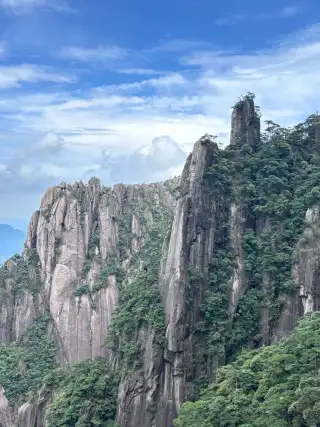
Mount Sanqing
Sanqing Shan · Jiangxi
A quieter Huangshan — granite peaks without the crowds
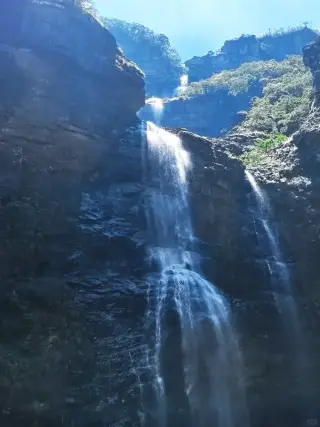
Mount Lushan
Lu Shan · Jiangxi
The mountain of poets, mist, and colonial villas — 1,500 years of inspiration
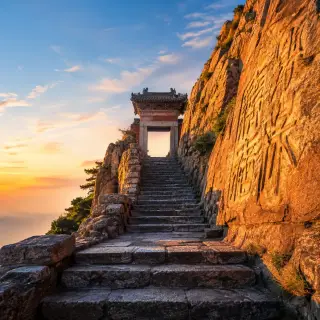
Mount Tai
Tai Shan · Shandong
The most sacred mountain — climbed by emperors for 3,000 years