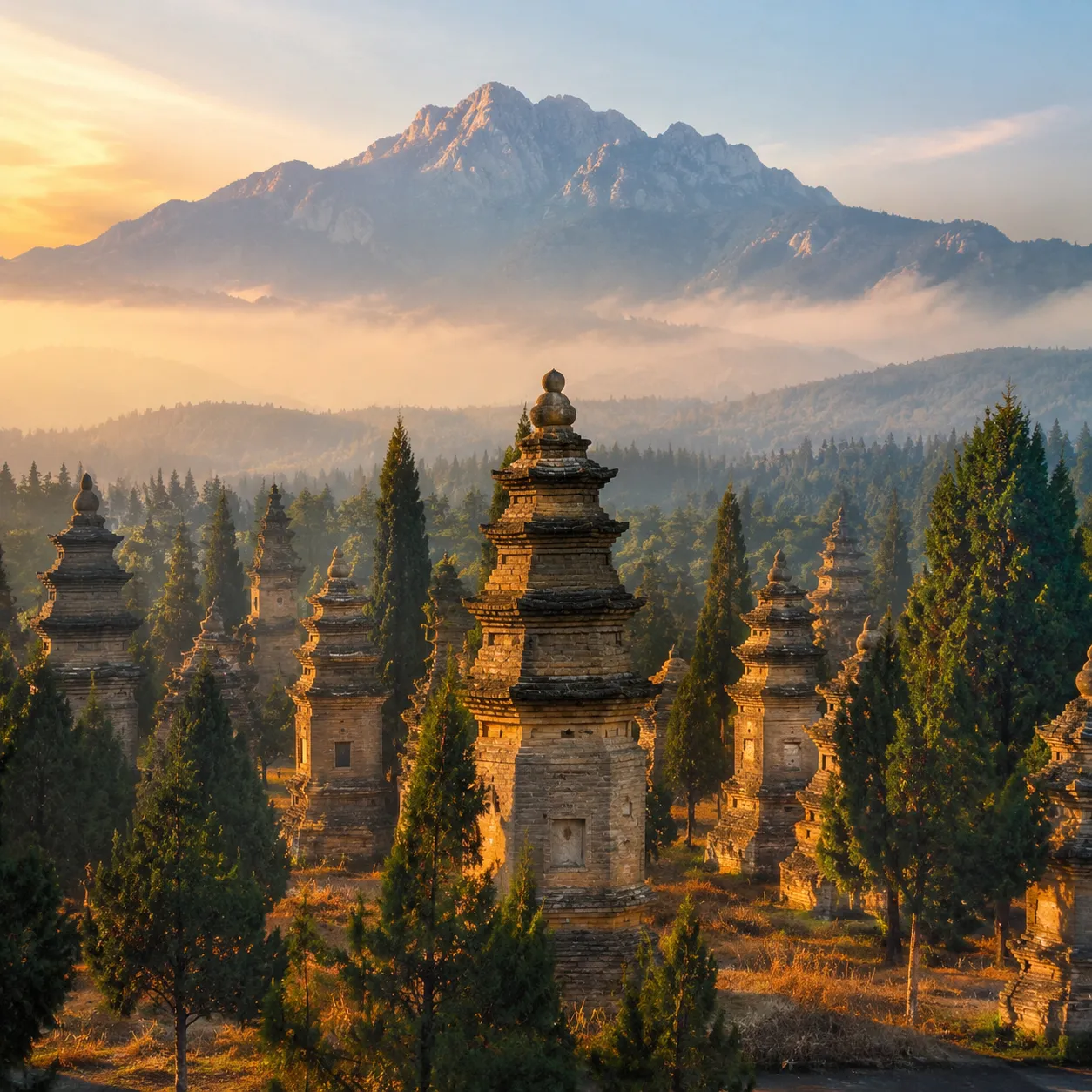
Photo: Chinese Mountains
Mount Song
Song Shan
Birthplace of Shaolin kung fu and Zen Buddhism, the Central Great Mountain
About Mount Song
Mount Song (Songshan) in Henan Province is the Central Great Mountain of China and the only one of the Five Great Mountains whose significance rests primarily on one institution: the Shaolin Temple. Founded in 495 AD, Shaolin is the birthplace of Zen (Chan) Buddhism and the spiritual home of Chinese kung fu. The temple complex at the mountain's base is one of the most famous monasteries in the world, with daily kung fu demonstrations by students from the surrounding martial arts schools, the Forest of Pagodas (a cemetery of 240+ stone stupas housing the ashes of generations of monks), and halls where the floor stones are visibly worn from centuries of monks practicing their stances. But Mount Song is more than Shaolin. The mountain itself, rising to 1,512 meters at Junji Peak, offers excellent hiking along forested ridges with panoramic views of the Yellow River valley. The Songshan geological structure is unique — it preserves a near-complete stratigraphic record spanning 3.6 billion years, earning it UNESCO Global Geopark status. The Songyang Academy, one of China's four great ancient academies, stands on the mountain's southern slope, where Confucian scholars taught for over a thousand years. Together, these three strands — Buddhist martial arts at Shaolin, Confucian scholarship at Songyang, and Daoist practice in mountain hermitages — make Songshan a microcosm of Chinese civilization. The mountain is accessible from Zhengzhou (1.5 hours by bus) and Luoyang (1 hour), making it an easy addition to any Henan itinerary. Spring and autumn offer the best hiking weather, but the Shaolin Temple is a year-round destination.
Mountain Facts
Cultural Significance
Home to the Shaolin Temple, the birthplace of Chan (Zen) Buddhism and Shaolin kung fu. One of the Five Great Mountains of China.
Highlights
- • Shaolin Temple and Pagoda Forest
- • Daily kung fu performances
- • Songyang Academy
- • Sanhuang Village scenic trail
- • Fawang Temple
When to Go
April-May and September-October offer the best balance: 15-28 C, clear air, and the Shaolin Temple grounds at their greenest. Spring is the pilgrim season for the Zhongyue Temple fair (3rd lunar month), adding folk performances to the mountain. Summer (June-August) is hot (30-38 C) — the Songshan ridges are exposed and shade is scarce, so climb early and carry water; this is also when the famous Shaolin martial arts performances run most frequently. Autumn (September-November) brings crisp air and the best views from Jijun Peak (1,512m) over the surrounding plains. Winter (December-February) is cold (0-10 C) but quiet, with occasional snow dusting the temple roofs; Shaolin and the cable car stay open year-round. The best photograph of the day is the morning light on the pagoda forest at Shaolin.
How to Get There
By Air: Fly to Zhengzhou Xinzheng International Airport (CGO) — the main gateway for Henan, with flights from all major Chinese cities. From the airport, take the airport shuttle or taxi to Zhengzhou East Station (30 min), then the high-speed train to Dengfeng (about 40 minutes via the Zhengzhou-Dengfeng intercity line, which stops at Dengfeng station). By High-Speed Train: Zhengzhou East Station is on the Beijing-Guangzhou line (2.5h from Beijing, 1.5h from Xi'an). From Zhengzhou East, direct buses to Dengfeng take 1.5 hours (CNY 40). From Dengfeng town, bus 1 or taxis reach the Songshan scenic area gates (10-15 min). Songshan has two main areas: Shaolin Temple (west, with the pagoda forest and martial arts school) and the Zhongyue Temple/Taishi Ridge (east). The shuttle between them takes 30 minutes. Entry Fee: Shaolin CNY 100 (2024); Taishi Ridge CNY 80; combination tickets available.
Frequently Asked Questions
Is Mount Song worth visiting? +
What is the best time to visit Mount Song? +
How do I get to Mount Song? +
How difficult is hiking Mount Song? +
What should I bring for Mount Song? +
You May Also Like
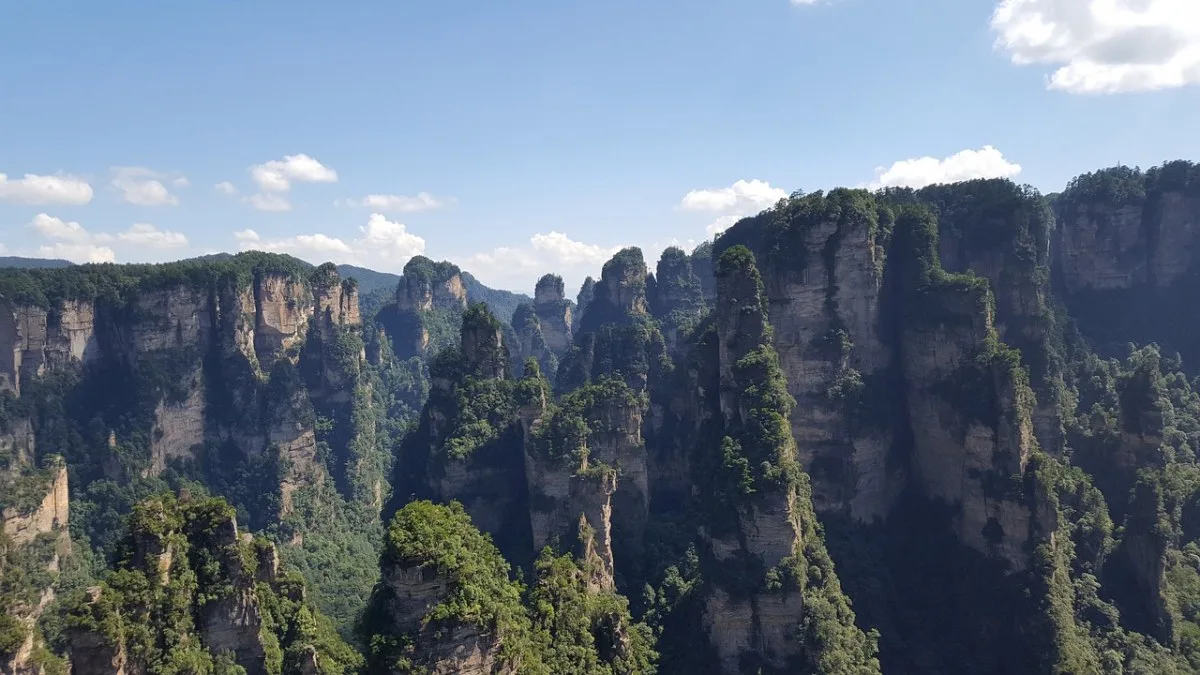
Zhangjiajie National Forest Park
Zhangjiajie · Hunan
Otherworldly quartz-sandstone pillars that inspired Avatar's floating mountains
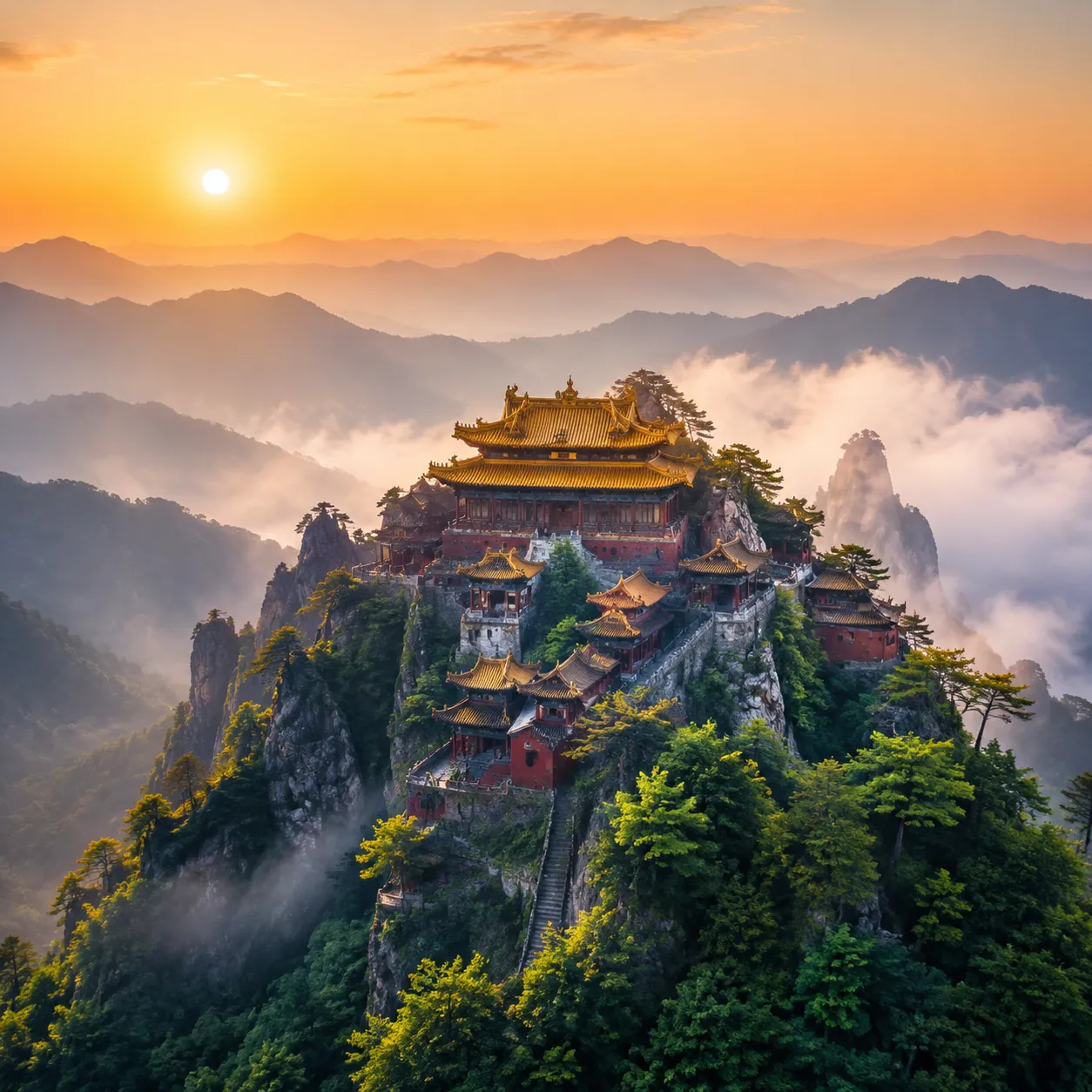
Wudang Mountains
Wudang Shan · Hubei
Birthplace of Tai Chi — ancient Daoist temples on misty peaks
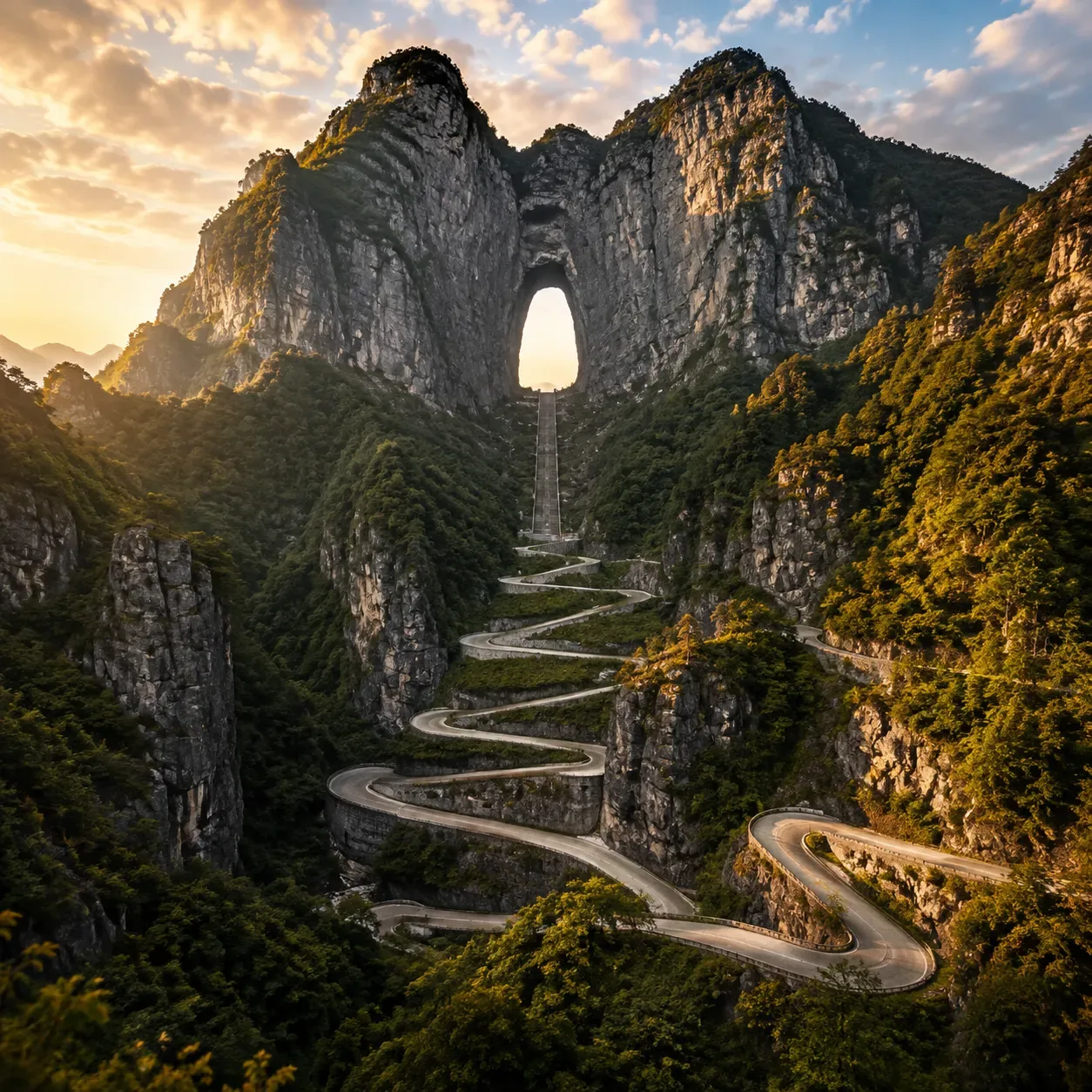
Tianmen Mountain
Tianmen Shan · Hunan
Heaven's Gate — a natural arch and the world's longest cable car